
Aurora City Directory Collections
Aurora's historical directory trail is a mix of one verified digital run, museum bibliography targets, library indexes, and regional volumes. The collection table distinguishes a true local title from a Denver suburban or householder source. A citation in an Aurora survey can establish that a title and year were consulted or located, but it does not guarantee a free scan. Confirm the physical or digital access route before promising an entry.
| Collection | Years | Where held | Access |
|---|---|---|---|
| Library of Congress Aurora telephone directory | Winter 1936/37 through May 1947 | Library of Congress digital collection | Free text, image, and PDF; check OCR |
| Aurora Annual Directory | 1930 | Aurora History Museum survey bibliography | Year-specific lead; publisher not identified |
| Aurora Telephone, Mountain Bell | 1939 | Aurora History Museum survey bibliography | Bibliographic target; exact scan not located |
| XL Directory of Aurora, Section B, Denver Suburban | 1941 | Museum survey bibliography | Regional title; verify geography |
| Complete Directory of Aurora | 1948 | Museum survey bibliography | Powell Advertising Sales Agency title |
| Aurora Directory and later city runs | 1952, 1953, 1955, 1957, 1959, 1962 | Museum and Hoffman Heights survey citations | XL Directory Service or Loveland references; access varies |
| Denver Combined Suburban Directory, Volume III | 1962 | Aurora History Museum survey bibliography | X-L; Aurora and Brighton suburban coverage |
| Denver Suburban Directory | 1972-73 | Aurora History Museum survey bibliography | R.L. Polk; regional volume |
The years are not a smooth scan from 1930 through 1973. The Library of Congress run ends in May 1947, while later local years are museum targets or physical and library-mediated citations. Search the title, municipality, county, and year before treating an absent result as a missing person or a missing volume.
Digitized Aurora Telephone Directory Years
The Library of Congress Aurora telephone directory is the clearest local digital anchor. Its title identifies Colorado, white pages, yellow pages, Aurora, and Winter 1936/37 through May 1947. The catalog provides digital text, images, and PDF access. White-page entries can include a subscriber, address, and telephone number. Yellow-page material adds business and service categories. Institutional or exchange listings can look like people records until the page heading is read.
OCR needs a visual check. The local run includes a sample rendered as “Allen Frank R | r | 10355 E 23d av. | Aurora-209” and another as “Baggot James J | r, rear | 12033 E Colfax av. | Aurora-566-W.” Column breaks, initials, street abbreviations, and the difference between a residence mark and a business line can all be damaged in text. Copy the page image, heading, and page identifier with the transcription.
Search the run by surname, street number, East Colfax variants, Fitzsimons-area terms, exchange, and nearby institution. A directory listing means that a name was printed for that publication context. It does not establish ownership, legal occupancy, or presence on every day of the year. A name that fails the search may be unlisted, misspelled, outside the volume's coverage, or hidden by OCR.
The Aurora library research gateway is the manifest source for the local collection and related databases.
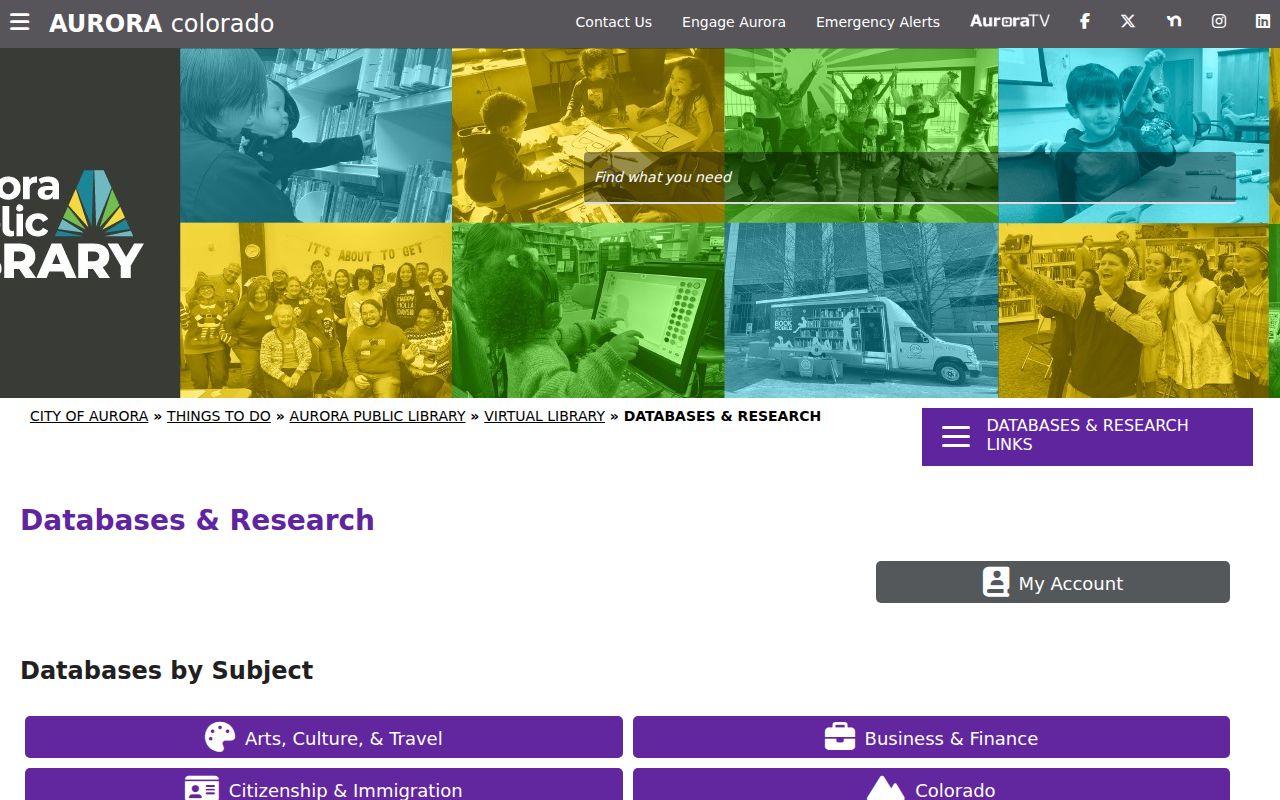
The gateway connects Colorado, genealogy, history, newspaper, and licensed research resources that can extend a directory clue into an obituary or address notice.
Aurora Directory Years and Publishers
The museum survey citations give later Aurora city directory work a reliable set of targets. The 1930 Annual Directory has no publisher identified in the source. The 1939 Aurora Telephone is associated with Mountain Bell. The 1941 XL Directory of Aurora, Section B, is a Denver Suburban title. The 1948 Complete Directory of Aurora names Powell Advertising Sales Agency. The 1952 Aurora Directory cites XL Directory Service. The Hoffman Heights survey points to 1953, 1955, 1957, 1959, and 1962 city-directory years with XL Directory Service or Loveland references.
Two 1962 entries need careful separation. The local city-directory citations are one thread, while the Denver Combined Suburban Directory, Volume III, is an X-L regional volume covering Aurora and Brighton. The 1972-73 Denver Suburban Directory is attributed to R.L. Polk. Publisher names help locate a shelf and explain why one volume may be a city title and another a suburban compilation. They do not turn a regional entry into a city-only record.
Physical-only or library-mediated years should be labeled that way. The inspected research did not locate stable official scans of residential entries for the 1953, 1955, 1957, 1959, or 1962 runs. The next access channels are Aurora History Museum finding aids, Aurora Public Library research assistance, Denver Public Library collections, the Colorado Directories Index, and a specific reproduction or appointment request.
The Aurora Genealogical Society is a local referral and interpretation layer for directory and family-history work.
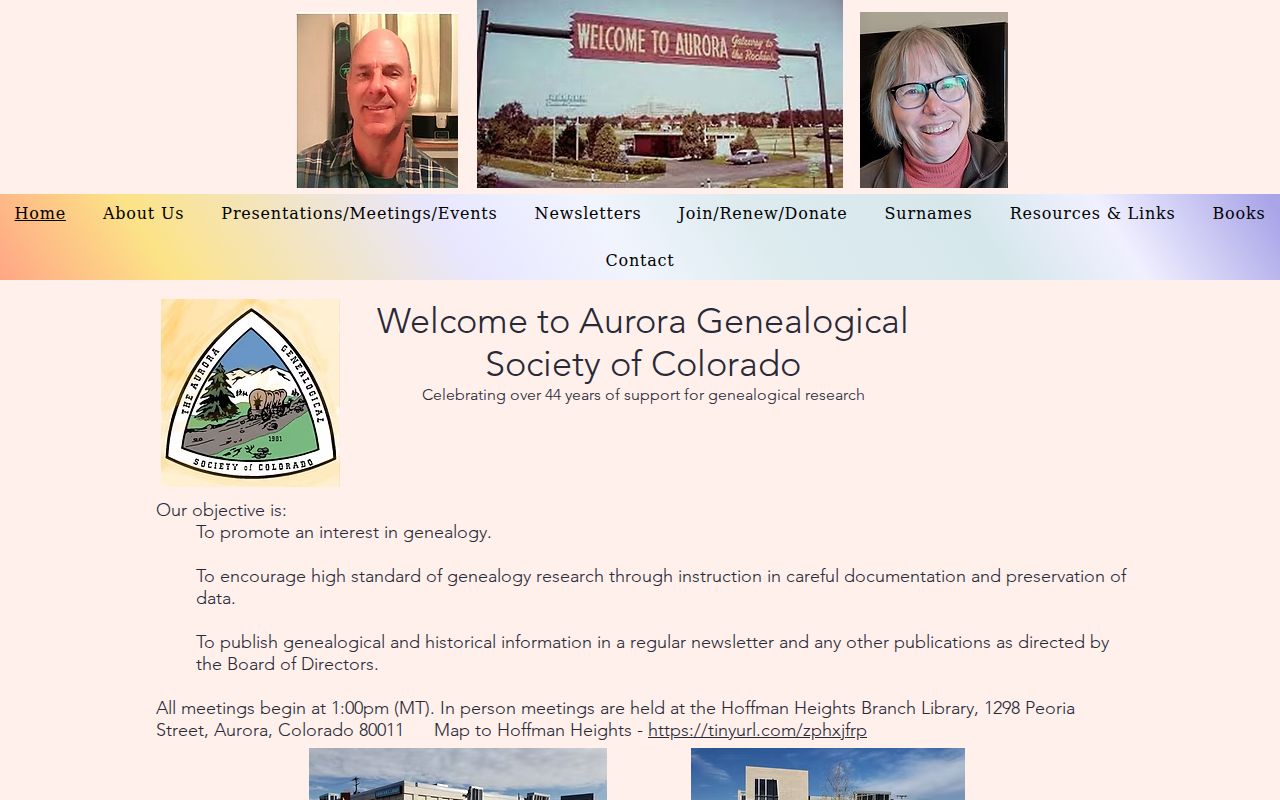
The society reports more than 44 years of activity and points researchers toward repositories, newspapers, marriage and death indexes, obituary scrapbooks, cemetery material, and the State Archives. Ask for a repository, page, and year rather than treating a volunteer index as complete.
Reading an Aurora City Directory Entry
An Aurora city directory entry is a compact record, and its marks need to remain tied to the original volume. A local telephone row may carry a subscriber or business name, residence marker, street address, and exchange or number. A later city or suburban volume may add an occupation, spouse or widow notation, owner or renter indicator, and a householder or street-order section. The exact fields vary by year and publisher.
| Name | Copy surname, given name, initials, honorific, spouse or widow notation, and the spelling exactly as printed. |
|---|---|
| Address | Preserve house number, direction, street abbreviation, unit or rear notation, city label, and page. |
| Telephone or exchange | Record the local exchange and number when a telephone volume provides them. |
| Occupation or affiliation | Some formats include occupation, employer, institution, or business category; classify the line before using it as a household clue. |
| Residence or ownership mark | Keep “r” or other residence, owner, renter, boarding, or rooming marks with the volume's abbreviation key. Do not expand an unclear mark from memory. |
The research includes a Denver regional sample used to teach abbreviation reading: “Adams Mabel Miss, nurse, rms 8, 1769 Logan.” It is not an Aurora resident claim. In that sample, “r” commonly means resides, “rms” means rooms or rooming, and “b” means boarding. Photograph the key before transcribing a local line.
- Criss-cross directory
- An address-order section that can move from a street address to a listed occupant or owner for the volume's covered geography.
- Householder index
- An address or household finding aid used to locate names in a street-order or resident-oriented run.
- Abbreviation key
- The publisher's explanation of short marks such as residence, rooming, boarding, spouse, widow, or business categories.
- OCR
- Optical character recognition, which turns a scanned page into searchable text but can scramble columns, names, numbers, and street abbreviations.
Householder and Criss-Cross Aurora Directories
City directories and householder or criss-cross directories answer opposite questions. A name-first directory can lead to an address, telephone number, business, occupation, or institution. An address-order volume can lead to a listed occupant or owner. Neither is automatically a current Aurora residents directory. A subscriber may be only one member of a household, and an institution may occupy the same address that a researcher expects to be a private home.
Denver Public Library reports householder and criss-cross holdings from 1924 through 2018, with 1924-1937 digitized for its Denver geography. Its Denver directory holdings span 1866-1981, with Polk runs including 1899, 1913, and 1960-1996. These holdings are valuable methods and regional context, but the DPL geographic caveat matters: a Denver volume or a Denver property record should not be silently extended to an Aurora address. Check municipality, county, title, and suburban coverage for the specific book.
For a historical Aurora address, use the LOC local run first when the year fits, then search the museum's cited title and the Colorado Directories Index. Carry direction prefixes, old street spelling, nearby cross streets, subdivision names, and institutional labels into the next search. When a result is found, keep the page image and source geography beside the transcription.
Aurora City Directory Research at the Museum
The Aurora History Museum archival research route is important when a cited city directory year, neighborhood, person, or address is not openly scanned. The museum provides finding aids, supervised research appointments, research requests, and reproduction service. A request should name the person, address, neighborhood, institution, or topic and allow up to two weeks. Contact can be made by phone, email, written request, or appointment; the listed museum location is 15151 E Alameda, with 303-739-7000 and access@auroragov.org used in the research. Fees exist for research and reproductions, while the exact current fee sheet was not retrievable.
The museum's local-history collections can add photographs, oral-history context, institutional records, and neighborhood material around a directory row. The Aurora library gateway is the first stop for subscription databases and newspaper access. The Aurora Genealogical Society can suggest repository and page citations. The FamilySearch Center at 950 Laredo St. lists onsite computers, printing, trained volunteers, and scheduled hours, but the exact digitized Arapahoe deed or probate collection run was not verified. Call ahead for the catalog and reader route.
The Aurora History Museum archival research source is represented below.
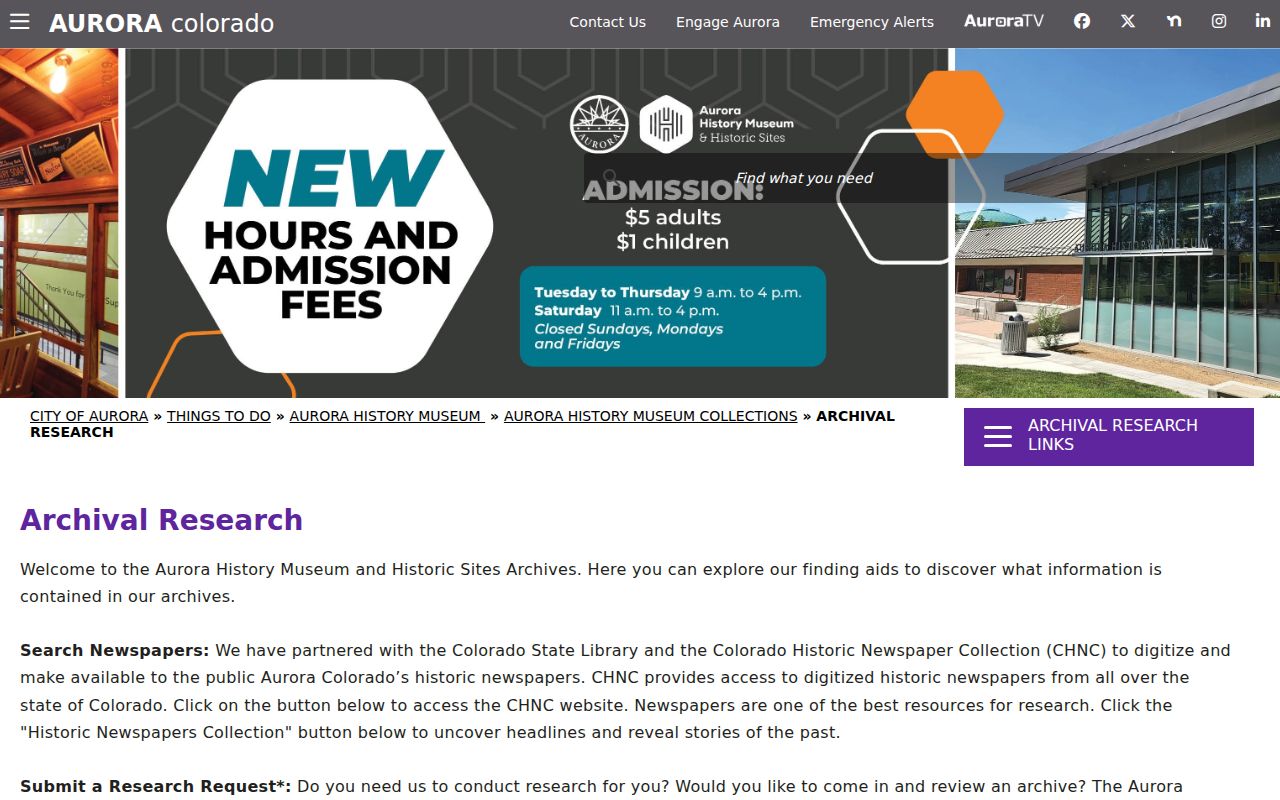
Finding aids and a focused appointment can fill the gap between a bibliography citation and a readable local entry.
Aurora Directory Geography at Denver Public Library
The Colorado Directories Index is a routing tool. Search the municipality, county, and year before ordering or visiting. For an Aurora question, test Aurora and the relevant Adams, Arapahoe, or Douglas county label, then inspect the title and geographic notes. The large JW_Directory PDF is an image and index resource, not a modern name search.
DPL's broader directory guide describes city, business, telephone, householder, owner or resident, occupation, address, and criss-cross arrangements. It also notes that Denver and Arapahoe property records from 1886-1971 are in Special Collections and are not digitized. A regional volume can be excellent for a former Aurora suburb, but the page must say whether the entry belongs to Denver, Aurora, a county, or a suburban section.
The DPL directory holdings guide supplies the collection and access context for an Aurora directory search.
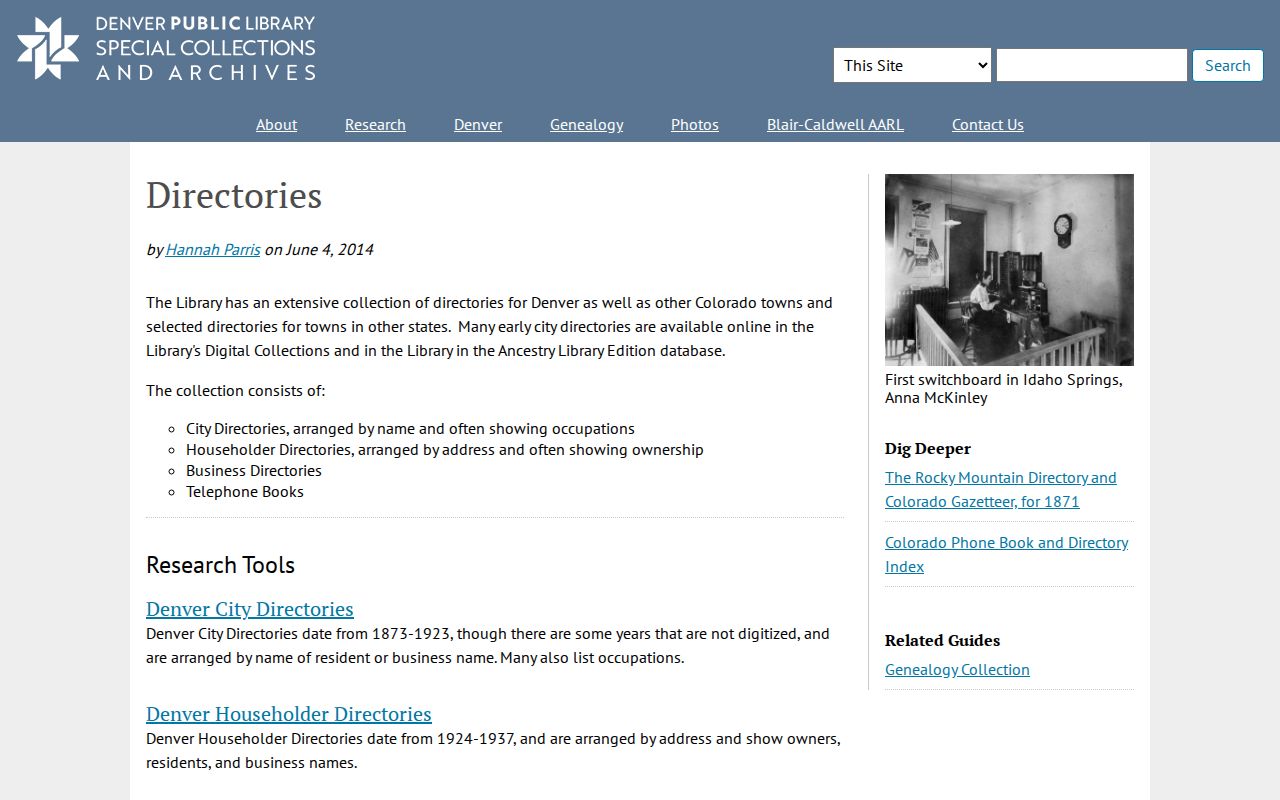
Library staff, Special Collections, and the volume's own title page are the checks that keep Denver material from being mislabeled as an Aurora directory volume.
The Colorado Directories Index source shows the municipality, county, and year routing layer below.
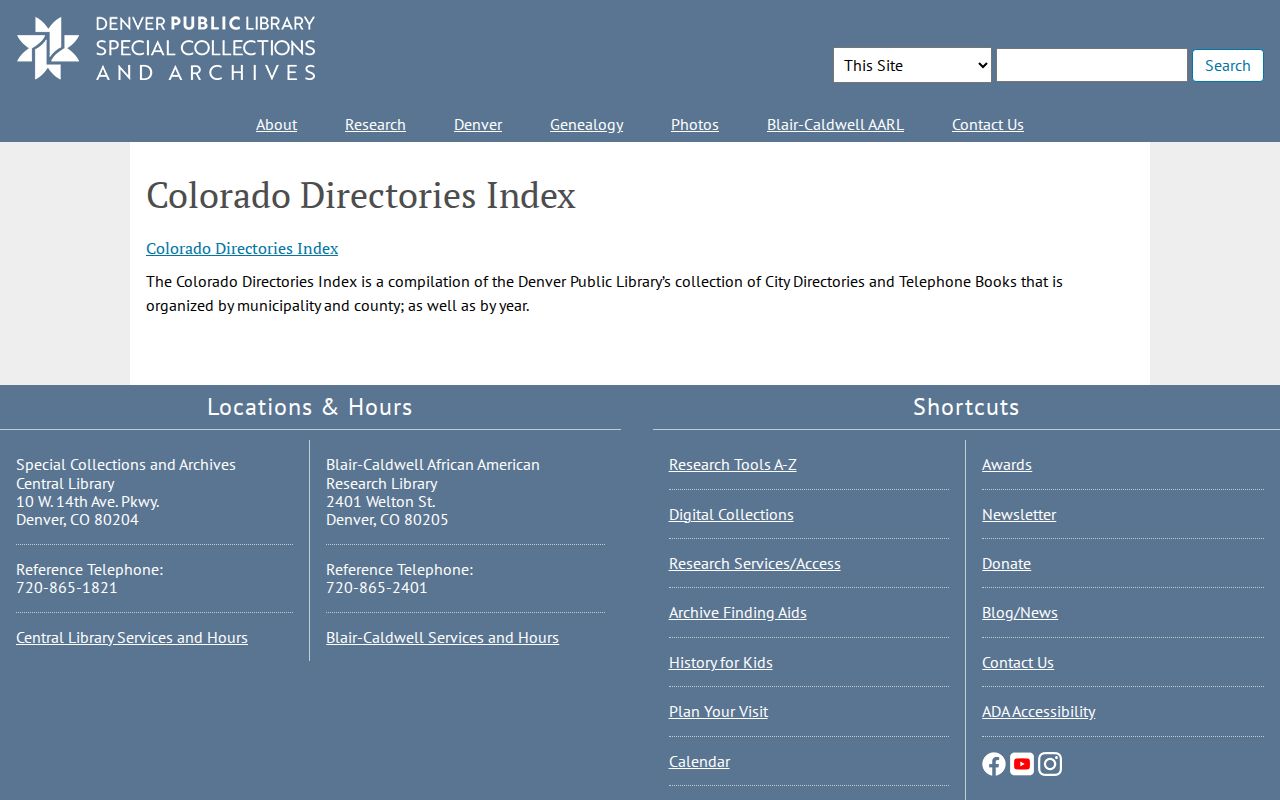
Use the index to find a title and repository, then verify the actual book's coverage before extracting a person or address.
Aurora Newspapers, Obituaries, and Census Years
A directory volume becomes more useful when it is paired with a notice or household source. The Aurora Public Library research gateway describes the Colorado Historic Newspapers Collection as more than 750,000 pages from 199 titles dated 1859-1923. Search a surname with Aurora, East Colfax, Fitzsimons, Lowry, Buckley, a street, subdivision, “estate,” “funeral,” “married,” “born,” or “died,” then read the page image because OCR can misread names and columns.
Denver Public Library's Western History and Genealogy resources include Colorado obituary scrapbooks from 1934-1963, the Colorado Statesman index, Riverside material, and funeral-home holdings. An obituary may point to a last address, relatives, funeral, or estate, but it is not a vital certificate. Pair the notice with an eligible vital or court route, a deed, or an archive finding aid.
The census comparison has a clear release distinction. The 1950 census was available under the 72-year rule at the August 2026 inspection. The 1960 census was not yet released. Directory entries reflect a publication period, while a census records a household on its census date. Build a small timeline instead of treating either as a current resident list.
Trace Aurora Directory Years Across Time
A household trail works when each directory year is copied with its original page, address form, publisher, and geographic label. Start with a confirmed name or exact address, then move through the next available volume. A move, death, unlisted subscriber, missed phone listing, OCR failure, or a changed city label can all create a gap. Deeds test ownership. Newspapers and obituaries test life events. Census years test household composition at a fixed date.
- Record the first confirmed entry with title, publisher, year, page, name, address, phone, occupation or affiliation, and any spouse, widow, residence, or ownership mark.
- Search the next cited year using the original spelling, initials, street abbreviations, direction variants, nearby cross streets, and the same institution or subdivision.
- Flip to a householder or criss-cross section when one exists, and preserve the volume's abbreviation key before expanding any mark.
- Pair directory years with the 1950 census when the dates fit, while keeping the 1960 release gap explicit and noting that publication and census dates differ.
- Close a likely move, death, or inheritance with CHNC, DPL obituary scrapbooks, a museum finding aid, a deed, probate, cemetery or State Archives material, and an eligible vital record.
For current address work, a historical directory volume should hand off to a parcel and recorder check rather than being stretched forward. The Aurora street directory owns that modern address-keyed chain. A directory volume remains strongest when it is read as a dated, geographically bounded snapshot.
Aurora Directory Timeline
A short timeline places the volumes in the city's record-keeping history and explains why the shelf is spread across repositories.
- 1891: Aurora's predecessor, Fletcher, was incorporated; the town was renamed Aurora in 1907.
- 1929: the first Aurora public library operated from Sarah Wood's home at 1516 Dallas Street.
- 1930: an Aurora Annual Directory is identified in the museum survey bibliography.
- Winter 1936/37 to May 1947: the Library of Congress local telephone directory run supplies digitized white and yellow pages.
- 1939 through 1972-73: museum and Hoffman Heights surveys identify later Aurora, Denver Suburban, and regional directory targets.
- 1977 and 1985: organized city-record preservation began in 1977, and the library assumed responsibility for archives in 1985.
- 2026: the 1950 census was available, the 1960 census was not yet released, and dynamic library or museum access still required source-by-source verification.
The timeline is not a claim that every intervening year survives. It is a practical index to the local directory, library, newspaper, museum, and archive channels that must be reconciled.